77 Drywall Nails Vs Screws
With many projects youll find yourself using both nails and screws. Nail pops caused by protruding nails used to secure drywall on a ceiling.
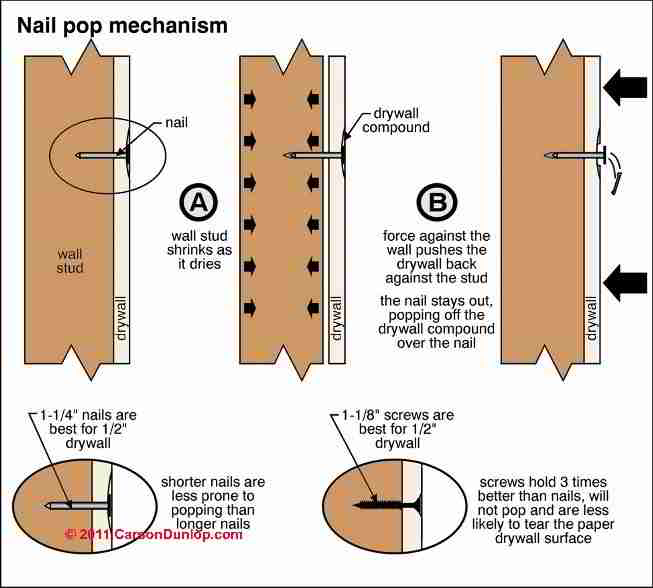
Drywall Nail Pops Cracks Complete Catalog Of Causes Cures Prevention Of Drywall Nail Or Screw Pops
What are best to use nails or screws.

Drywall nails vs screws. Nails when driven in drywall are countersunk slightly and give a much larger area for drywall. Heck you can also use them all around the house to mount shelves mirrors and cabinets. See more how-to drywall videos httpDrywallInstruction.
They usually feature a Phillips head. If you hang a heavy picture on a screw that is only supported by drywall it is likely to pull out of. In addition the screw must go through the drywall and into a stud.
Adhesive is great for vinyl corner bead. This is why I almost NEVER use drywall nails. Screws are the cheap way for pros to go and they will always take the cheap over the better.
Screws can be driven in with a drill or electric drywall screw gun. Drywall screws are used to secure drywall that typically comes in 4-foot by 8-foot sheets to wood or metal studs. A lot of people think that its only good to use screws but there is still a place for drywall nails.
Nails at top bottom plate screws everywhere else. Youll never have nail pops and itll be real rock solid. So if youre going to install drywall and glue it thats great.
Use screws instead of nails when you are working on a ceiling installation or working with metal studs or frames. Drywall or gypsum board will often crumble when a nail is hammered into them. If you need a bit more holding power than nails provide screws are usually the way to go since the threads can grab onto whatever material youre screwing into.
Nails are often preferred for structural joining including framing walls because they are more flexible under pressure whereas screws can snap. For example with a deck you may use nails to attach a joist to the deck frame but screws. Use 1 14-inch drywall screws to secure standard 12-inch drywall.
You can use them to replace nail pops. When choosing drywall screws vs. Screws are the best way to keep the drywall boards on.
Thats why commercial bums me out when hangingno nails. Youll see them a lot in woodworking as well as light-to-medium construction. Drywall nails are also an option.
Drive a new drywall screw into the wall about 1 to 2 inches above the popped screw. They can come loose. Typically in the hanging process professionals still tack up the sheetrock by nailing the borders and then come back and put screws in the fields.
Youll often use both nails and screws. To use adhesive you need to spray the inside of the vinyl bead where it will be applied to the corner and let it set for 5-8 minutes. That translates to approximately four or five screws per stud when hanging 48 drywall sheets.
The Basic Differences Between Screws and Nails The most fundamental difference between the screws and nails is the nails are smooth and dont feature any threads. Drywall corner bead can be installed with nails screws adhesive staples or other means. Nails with their smooth shanks are more likely to simply pull out of it.
A brief overview of drywall fasteners to help you decide. Usually use nails to tack a sheet up and once it holds screw everythingexcept when piecing in then I use mostly nails for little rips and wraps because its just plain faster. In this drywall how-to video I show the proper way to use drywall nails and screws.
Drywall nails are better and easier for the DIYer. But also you want to make sure its screwed in place. On the other hand screws have shank in most parts of its body.
For hanging heavy paintings artworks and other objects from walls you should definitely use a screw rather than a nail. Another advantage of screws with drywall is their holding power. Drywall screws offer the most secure way to reattach the drywall to the frame.
Nails are also called upon when securing plywood. Because drywall screws offer superior holding strength compared to nails youll be able to sink each screw about 12 apart - compared to the 7 spacing suggested for drywall nails. Screws are a pain and do not grab as much surface area as nails.
Nails consider the size of your project and the materials youll be using.
